



So, you’ve finally leaped into the world of Invisalign! Whether you’re a busy professional in the city or a student balancing a packed schedule, the promise of a straighter smile without the “metal-mouth” look is exciting. But then comes the big question from your orthodontist: “Are you ready to commit to the 22-hour rule?”
It sounds like a lot. That leaves only two hours for eating, drinking, and everything else. You might be wondering, “Does it really matter if I leave them out for a three-hour lunch?” or “Can I just wear them while I sleep?” The truth is, those hours are the secret sauce to your transformation. Let’s dive into the complex data, the science of tooth movement, and the professional guidelines that ensure your investment actually pays off.
The Golden Number: 20 to 22 Hours
If you ask any licensed orthodontist in the United States, they will give you a specific range: 20 to 22 hours per day. According to the American Association of Orthodontists (AAO), clear aligners are only effective when they are in direct physical contact with your teeth.
Unlike traditional braces, which are bonded to your teeth and work 24/7, Invisalign is a “compliance-based” treatment. This means the speed and success of your results are almost entirely in your hands—literally.
Why 22 Hours? The Science of “Tracking”
Invisalign in Boca Raton works through a process called controlled force. Each tray is engineered to move your teeth by approximately 0.25-0.33mm. For this movement to become permanent, the bone around the tooth root must “remodel.”
- Continuous Pressure: When you remove your aligners, that pressure stops.
- The Elastic Effect: Teeth have a natural memory. Without the aligner, they begin to shift back toward their original position almost immediately.
- Tracking: If you don’t wear your trays enough, the teeth won’t reach the position required for the next tray to fit. This is called “losing track,” and it’s the #1 reason for treatment delays.
The Consequences of the “Part-Time” Wear
It can be tempting to leave your aligners out for a wedding, a long date, or a weekend getaway. However, the data suggests that inconsistency leads to more than just a longer wait for your new smile.
- Increased Discomfort: When you leave aligners out for 4+ hours, your teeth shift back. Putting the tray back in feels much tighter and more painful than it should.
- The “Bounce” Effect: Constant “on-and-off” wear can cause the roots of your teeth to become stressed, which, in rare cases, can lead to root resorption (shortening of the roots).
- Refinement Costs: If your teeth stop tracking because you didn’t meet the 22-hour goal, your orthodontist may need to take new 3D scans and order “refinement” trays. Depending on your contract, this could result in extra out-of-pocket costs.
Real-World Compliance: What Patients Experience
In clinical practice and patient forums, you’ll see people talking about wear time — and not everyone hits the full 22 hours every single day. Many report averages like:
- 20–21 hours/day — often achievable with typical meal and hygiene routines.
- Occasionally lower (e.g., 18–19 hours) — usually still okay if infrequent and if aligners are snug and tracking correctly.
That said, orthodontists still encourage aiming high: the closer you stay to 22 hours daily, the more likely you’ll stay on your planned schedule and hit your treatment goals.
How to Hit Your Daily Wear Goal (Without Losing Your Mind)
Clocking nearly every hour of the day in aligners takes planning. Here are strategies that help you hit the recommended wear time:
Structure Around Meals
Most patients structure their day with short removal windows for breakfast, lunch, and dinner — usually totaling 2–4 hours per day.
- The “Eat-Brush-In” Routine: Limit your meals to 30 minutes. If you eat three meals a day and spend 10 minutes brushing after each, you’ve only used 120 minutes—leaving you exactly at the 22-hour mark.
Minimize Nibbling
Every snack means removing your aligners — and time out of the mouth. Consolidating eating into regular meals helps limit out-of-hours.
Use Reminders and Tracking
There are apps, timers, and even Invisalign-specific wear time trackers that remind you to pop your trays back in after meals.
Keep a Spare Case Handy
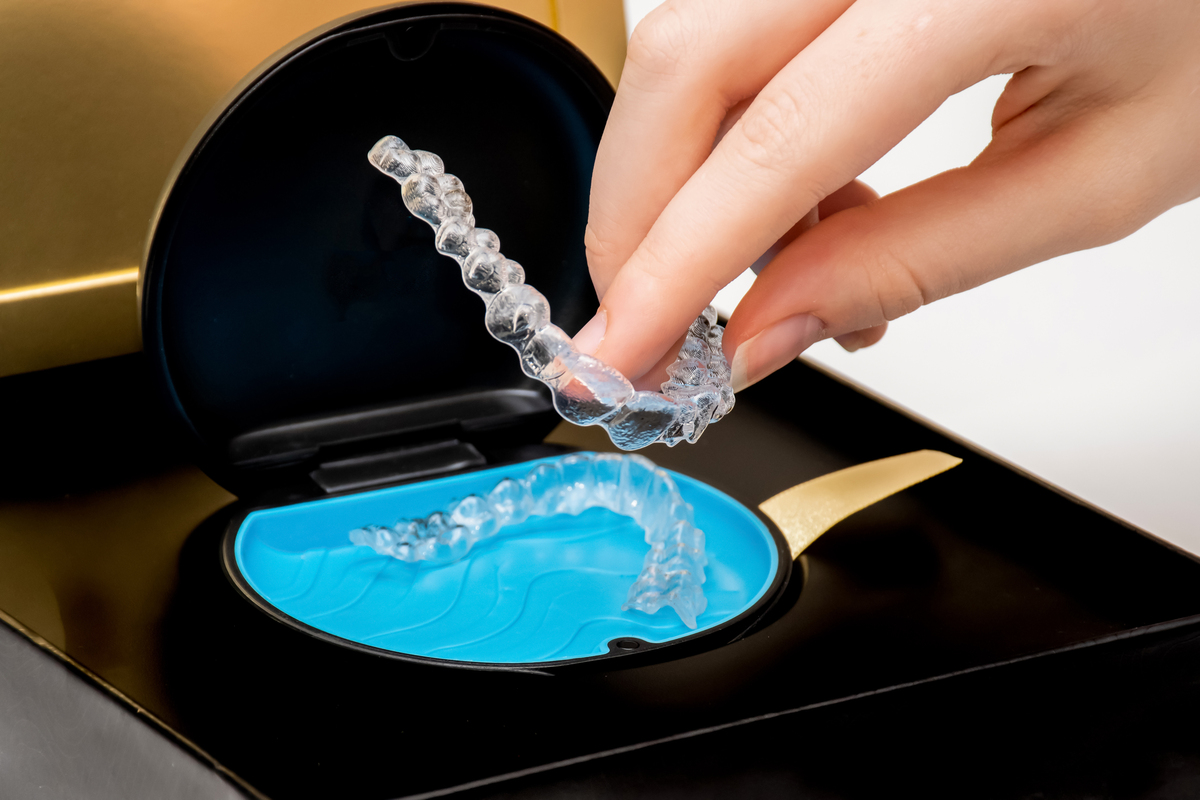
You’re more likely to keep wear time high if you always have a clean case for your trays when you eat.
The Night Shift is Gold
You get 7–8 hours of “free” wear time while you sleep. Never, ever go to bed without your aligners.
What Your Orthodontist Really Means
Sometimes recommendations vary slightly depending on your specific case. A few orthodontists may advise:
“Minimum 20 hours/day,” while others say
“Aim for 22–23 hours/day.”
Both fall within the same ballpark — your qualified orthodontist in Boca Raton is trying to ensure you minimize non-wear time while keeping the process on schedule.
Always follow the specific instructions your orthodontist gives you, because they tailor treatment plans based on your bite, tooth movements, and compliance expectations.
Conclusion
Invisalign is a miracle of modern technology, but it isn’t magic. It is a partnership between you and your orthodontist. By hitting that 20-22-hour daily goal, you ensure your teeth are moving exactly as the 3D software predicted. The data is precise: high compliance leads to a faster, more comfortable, and more successful transformation.
Remember, every hour those trays are in your pocket is an hour your teeth are trying to move back to where they started. Keep them in, stay consistent, and your “after” photo will be here before you know it!
Frequently Asked Questions
1. Can I wear Invisalign less than 20 hours a day and still get results?
Some patients average 18–20 hours with acceptable progress, but consistently skipping hours increases the risk of delays or refinements.
2. Should I wear Invisalign while I sleep?
Absolutely — your sleep hours count toward your daily total and are the easiest way to get in hours without noticing.
3. What happens if I accidentally leave them out for 4 hours?
Occasional extra out-of-mouth time isn’t usually catastrophic, but try to compensate by wearing them longer on other parts of the day. Your orthodontist can also advise on how to adjust.
4. Can I drink coffee with Invisalign in?
Only water should be consumed with aligners in place. Hot or colored drinks can warp or stain trays.
5. Will wearing them more than 22 hours help?
There’s no harm in wearing them longer, but the main goal is to hit the recommended range consistently. Extra hours don’t accelerate movement beyond your plan.