



Have you ever taken your Invisalign aligners out after lunch and noticed a cloudy film, an unpleasant smell, or food particles on the plastic? Keeping clear aligners clean is an important part of orthodontic treatment, but using the wrong cleaning products or techniques can scratch, stain, or distort them. The goal is to remove bacteria and buildup while preserving each tray’s fit and clarity.
For patients in Boca Raton, Florida, the warm weather, busy schedules, and frequent meals away from home can make aligner care a daily challenge. Whether you are heading to work, enjoying lunch with friends, or spending the day outdoors, a simple cleaning routine can help keep your aligners fresh and comfortable.
At Statler Orthodontics, Dr. Jennifer Statler helps patients understand how to care for their Invisalign aligners throughout treatment. With the right habits, you can protect your trays, support good oral hygiene, and avoid preventable damage. Here is how to clean Invisalign aligners safely—and which common mistakes to avoid.
Why Is It Important to Clean Invisalign Aligners Every Day?
Invisalign aligners in Boca Raton fit closely over your teeth. This close contact helps apply controlled pressure to guide teeth into their planned positions, but it also means saliva, plaque, and food residue can collect on the plastic.
If you put an unclean aligner back over your teeth, you may trap leftover food particles and bacteria against your enamel. Over time, poor oral hygiene can contribute to unpleasant breath, plaque accumulation, gum irritation, and tooth decay.
The Centers for Disease Control and Prevention (CDC) reports that approximately 21% of U.S. adults ages 20–64 had at least one untreated cavity in their permanent teeth, based on national surveillance data from 2017 through March 2020. This figure reminds us that tooth decay remains common, making daily oral hygiene important during orthodontic treatment.
Clean aligners also look better. Clear plastic can become cloudy or discolored when residue accumulates. A consistent cleaning routine helps maintain transparency and makes it easier to wear your trays confidently throughout the day.
How Do You Clean Invisalign Aligners Safely?
The safest approach is to use gentle cleaning methods and follow your orthodontist’s and aligner manufacturer’s instructions. Avoid experimenting with household products or aggressive scrubbing.
1. Rinse Your Aligners Whenever You Remove Them
Each time you remove your aligners, rinse them under cool or lukewarm running water. This helps wash away saliva and loose debris before it dries on the plastic.
Avoid hot or boiling water. Heat can change the shape of thermoplastic aligners, which may affect how they fit over your teeth. Even if a tray looks normal after exposure to high temperatures, its fit may have changed.
Make rinsing a habit when you remove your trays for meals, snacks, or brushing. This simple step can reduce residue between deeper cleaning sessions.
2. Use a Soft-Bristled Toothbrush
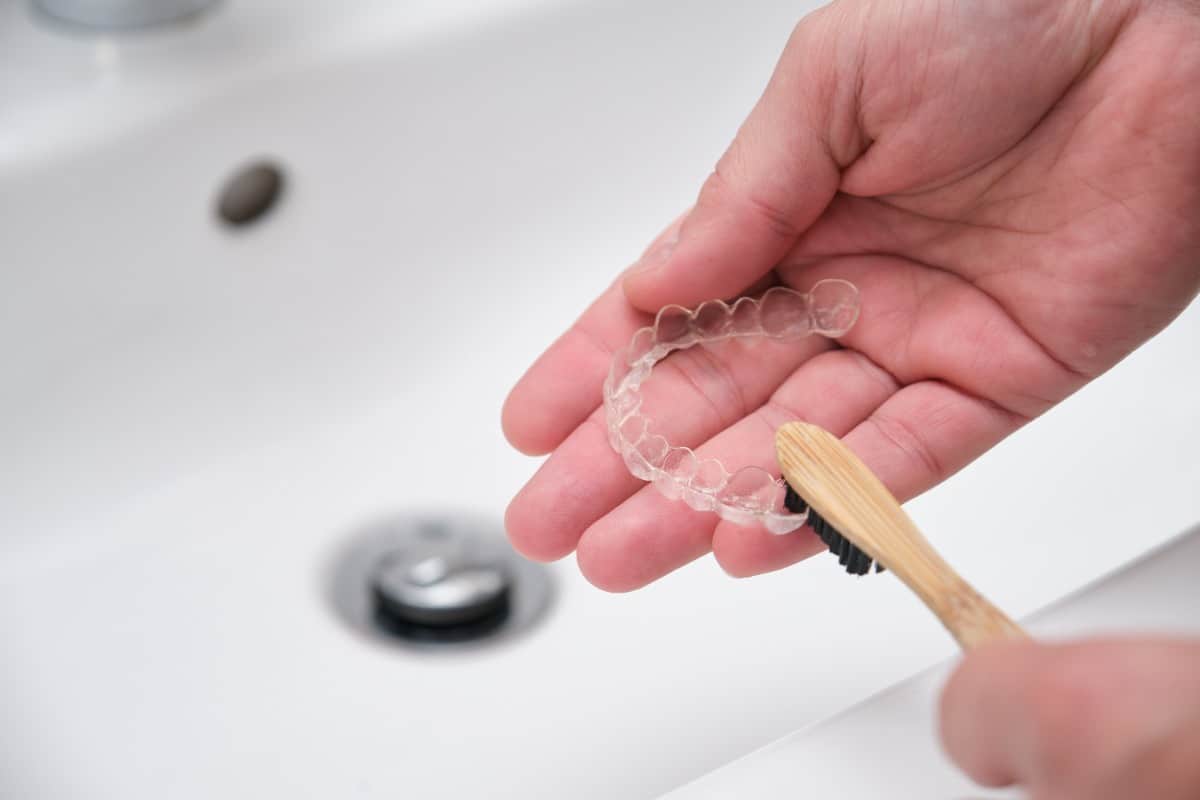
A soft-bristled toothbrush can help remove buildup from the inside and outside surfaces of your aligners. Keep a separate toothbrush for your trays to avoid transferring toothpaste residue or other debris from your regular oral care routine.
Brush gently with small circular movements. Pay attention to the grooves and edges where saliva and debris may collect. Avoid applying excessive pressure or using a stiff-bristled brush.
Invisalign’s patient care instructions recommend cleaning aligners with a soft-bristled toothbrush, water, and a small amount of toothpaste, then rinsing thoroughly. Because abrasive products can affect plastic surfaces, ask your orthodontist which toothpaste or alternative cleaning product suits your specific trays.
3. Choose an Appropriate Cleaning Product
You may use a cleaning product specifically designed for Invisalign aligners if your orthodontist approves it. Follow the product’s directions carefully, including the recommended soaking time and water temperature.
Some orthodontic professionals recommend mild, clear soap for certain removable appliances. However, cleaning recommendations can vary by aligner material and the manufacturer’s instructions. Don’t assume a product suitable for dentures or retainers is automatically safe for Invisalign trays.
Avoid colored or strongly scented products, as they may leave residue or an unpleasant taste. After cleaning, rinse the aligners thoroughly before putting them back in your mouth.
4. Clean Both the Inside and Outside Surfaces
It is easy to focus on the outside of your aligners because that is the surface you see when wearing them. However, the inside also comes into direct contact with your teeth and saliva.
Remove the trays and gently clean both surfaces. Pay attention to the edges, where buildup may be less noticeable.
Do not use sharp tools, fingernails, or abrasive materials to scrape away stubborn residue. If a deposit does not come off with gentle cleaning, ask your orthodontist for advice rather than risking scratches or cracks.
5. Rinse Thoroughly Before Reinserting
After cleaning, rinse your aligners with clean water to remove any remaining cleaning solution or debris. Residue left on the plastic may cause an unpleasant taste or irritate your mouth.
Before reinserting the trays, make sure your hands are clean. Brush and floss your teeth after meals whenever possible. Clean aligners before placing them over your teeth to avoid leftover food particles that can undermine your oral hygiene routine.
Which Cleaning Products Should You Avoid?
Not every household cleaning product is appropriate for orthodontic appliances. Some substances can scratch, discolor, dull, or distort aligner plastic.
Here are several products and methods to avoid unless your orthodontist specifically recommends otherwise:
- Hot or boiling water: High temperatures can deform the plastic and affect your aligners’ fit.
- Abrasive or whitening toothpaste: Gritty formulas and aggressive brushing may scratch the surface, making clear plastic appear cloudy.
- Bleach and household cleaners: These products are not designed for oral appliances and may damage the material or leave harmful residue.
- Mouthwash soaking: Invisalign’s patient instructions warn against soaking aligners in mouthwash because it can dull the surface and make the trays more visible.
- Denture cleaners: Do not assume denture-cleaning tablets are safe for Invisalign. The manufacturer’s patient instructions specifically advise against using denture cleaners on its aligners.
A recent systematic review of cleaning protocols for clear aligners and retainers found that cleaning methods can affect surface, optical, and mechanical properties. The researchers also noted that results vary by material and cleaning method, and that more clinical research is needed to establish one universally optimal protocol. This supports choosing gentle, manufacturer-compatible care rather than relying on unverified cleaning hacks.
How Often Should You Clean Invisalign Aligners?
Clean your aligners every day. A practical routine is to rinse them whenever you remove them and gently clean them as part of your morning and evening oral hygiene habits. Follow any additional instructions from your orthodontist.
Invisalign treatment typically requires wearing aligners for approximately 20–22 hours per day, although your orthodontist will provide the schedule appropriate for your treatment plan. That means your trays spend much of the day in contact with your teeth and saliva, so regular cleaning is especially important.
A simple daily schedule can help:
- In the morning: Remove your aligners, rinse and clean them, then brush and floss your teeth before reinserting them.
- After meals: Keep your trays in their case while eating. Brush your teeth before putting them back in whenever possible.
- During the day: Rinse your aligners each time you remove them and avoid leaving them exposed on a counter.
- Before bedtime: Brush and floss thoroughly, clean your aligners, rinse them, and reinsert them according to your treatment instructions.
Consistency matters more than using multiple cleaning products. A gentle routine followed every day is generally more practical than occasional intensive cleaning.
How Should You Store Invisalign Aligners When They Are Not in Use?
Proper storage protects your aligners from dirt, damage, and accidental loss. Whenever you remove your trays, place them in their designated protective case.
Avoid wrapping them in napkins or tissues. It is easy to forget that the aligners are inside and accidentally throw them away. Leaving them on a restaurant table, bathroom counter, or car dashboard can also expose them to contamination or heat.
The American Association of Orthodontists (AAO) advises patients to use their aligner case when trays are removed and to keep the case somewhere safe. The AAO also recommends removing aligners before eating or drinking anything other than water.
For patients with busy schedules, carrying a small cleaning kit can make daily care easier. Consider keeping these items together:
- Your Invisalign case
- A travel-sized soft toothbrush
- Fluoride toothpaste for your teeth
- Dental floss
- An orthodontist-approved aligner cleaning product
Never leave your aligners in a hot vehicle, especially during warm Florida weather. Heat exposure may affect the plastic and compromise the fit.
What Should You Do If Your Invisalign Aligners Become Cloudy or Smell Bad?
Cloudiness or an unpleasant odor may develop when plaque, saliva, and other residue remain on the trays. Start by rinsing the aligners and gently cleaning them with an appropriate soft toothbrush and a manufacturer-approved method.
If the odor or film remains, do not immediately turn to bleach, strong mouthwash, or abrasive cleaning products. These may cause more damage. Ask your orthodontist whether a specific cleaning product or professional evaluation is appropriate.
Also consider your oral hygiene habits. Brush your teeth twice daily with fluoride toothpaste, floss once a day, and clean your mouth after meals before reinserting your aligners. The AAO emphasizes brushing after eating and keeping aligners clean during orthodontic treatment in Boca Raton.
If your aligner has developed cracks, rough edges, or an unusual shape, cleaning may not solve the problem. Contact your orthodontist before continuing to wear a damaged or poorly fitting tray.
How Can You Prevent Invisalign Stains and Damage?
Preventing damage is easier than restoring a scratched or distorted aligner. A few everyday habits can help keep your trays in good condition.
- Remove aligners before eating. Food can become trapped between the tray and your teeth, while chewing may damage the plastic.
- Drink only plain water while wearing them. Coffee, tea, soda, juice, and other colored or sugary beverages can stain aligners or expose teeth to sugars and acids. Remove your trays before consuming these drinks.
- Keep your aligners away from pets. Dogs and other pets may chew on trays left within reach.
- Handle trays carefully. Use both hands when removing aligners, and avoid bending them unnecessarily.
- Inspect them regularly. Before reinserting your trays, check for cracks, rough edges, or shape changes. Report significant damage to your orthodontist.
These habits protect your aligners and support the consistency needed for orthodontic treatment.
How Statler Orthodontics Helps Patients Maintain Invisalign Treatment
Successful Invisalign treatment involves more than changing from one set of trays to the next. Patients also need guidance on wearing, cleaning, storing, and handling their aligners correctly.
At Statler Orthodontics, Dr. Jennifer Statler can help patients understand their aligner care instructions and address concerns about discoloration, odor, damage, or fit. If you are unsure whether a cleaning product is appropriate, ask before using it. Recommendations should account for your specific appliance and treatment plan.
Regular orthodontic appointments also let your provider monitor tooth movement and check whether your aligners fit as expected. Continue routine dental examinations and professional cleanings with your general dentist to help maintain healthy teeth and gums throughout treatment.
Whether you are considering clear aligners or already wearing them, a personalized care routine can help make treatment easier to manage.
Conclusion
Cleaning Invisalign aligners without damaging them comes down to gentle care, suitable products, and consistent daily habits. Rinse your trays whenever you remove them, use a soft-bristled toothbrush and an approved cleaning method, and avoid hot water, harsh chemicals, and abrasive products. Store your aligners in their protective case and clean your teeth before putting them back in after meals.
Your aligners are an important part of your orthodontic treatment, so protecting their condition and fit matters. If you notice persistent cloudiness, an unpleasant odor, cracks, or changes in fit, contact your orthodontist instead of trying aggressive cleaning methods.
Visit our dental practice in Boca Raton, FL. Book now to schedule your appointment with our team at Statler Orthodontics and discuss your Invisalign treatment with Dr. Jennifer Statler.
Frequently Asked Questions
1. How often should I visit the dentist during Invisalign treatment?
Continue routine dental exams and professional cleanings as your dentist recommends. These visits help monitor your teeth and gums during orthodontic treatment. Our orthodontist can recommend a schedule based on your oral health needs.
2. Can I drink coffee while wearing Invisalign aligners?
Remove your aligners before drinking coffee. Coffee can stain the plastic, and hot beverages may affect the trays’ shape. Our orthodontist can explain how to protect your teeth and aligners when enjoying coffee and other beverages.
3. What should I do if my Invisalign aligner breaks?
Contact your orthodontist for instructions instead of trying to repair the tray yourself. Your provider can advise whether you should use a previous aligner, move to the next one, or obtain a replacement. Our orthodontist can also help address any related oral health concerns.
4. Can I use an electric toothbrush during Invisalign treatment?
Yes. An electric toothbrush can be used to clean your natural teeth while you are undergoing Invisalign treatment. Remove your aligners before brushing and follow your usual oral hygiene routine. Our orthodontist can recommend a toothbrush and brushing technique that suits your needs.
5. How can I prevent bad breath while wearing Invisalign?
Clean your aligners regularly, brush twice daily, floss once a day, and clean your teeth after meals before reinserting your trays. Drink water throughout the day and avoid wearing unclean aligners. Our orthodontist can evaluate persistent bad breath and recommend appropriate care.