




Have you ever looked in the mirror and found yourself focusing on that one tooth that seems to be pushing its way to the front? Or perhaps you’ve spent years perfecting the “closed-mouth smile” because your teeth feel a bit too “cozy” in your jaw? If so, you’re certainly not alone. In fact, nearly 66% of the U.S. population deals with some level of dental crowding.
The good news? The days of “metal mouth” being your only option are long gone. As we move through 2025, invisible braces—specifically clear aligners—have become the gold standard for adults looking to straighten their smiles without the world knowing. But do they actually work for crowded teeth, or are they just for minor tweaks?
Let’s dive into the data, the costs, and the technology behind the clear aligner revolution to see if they’re the right fit for your smile.
What Are Invisible Braces Anyway?
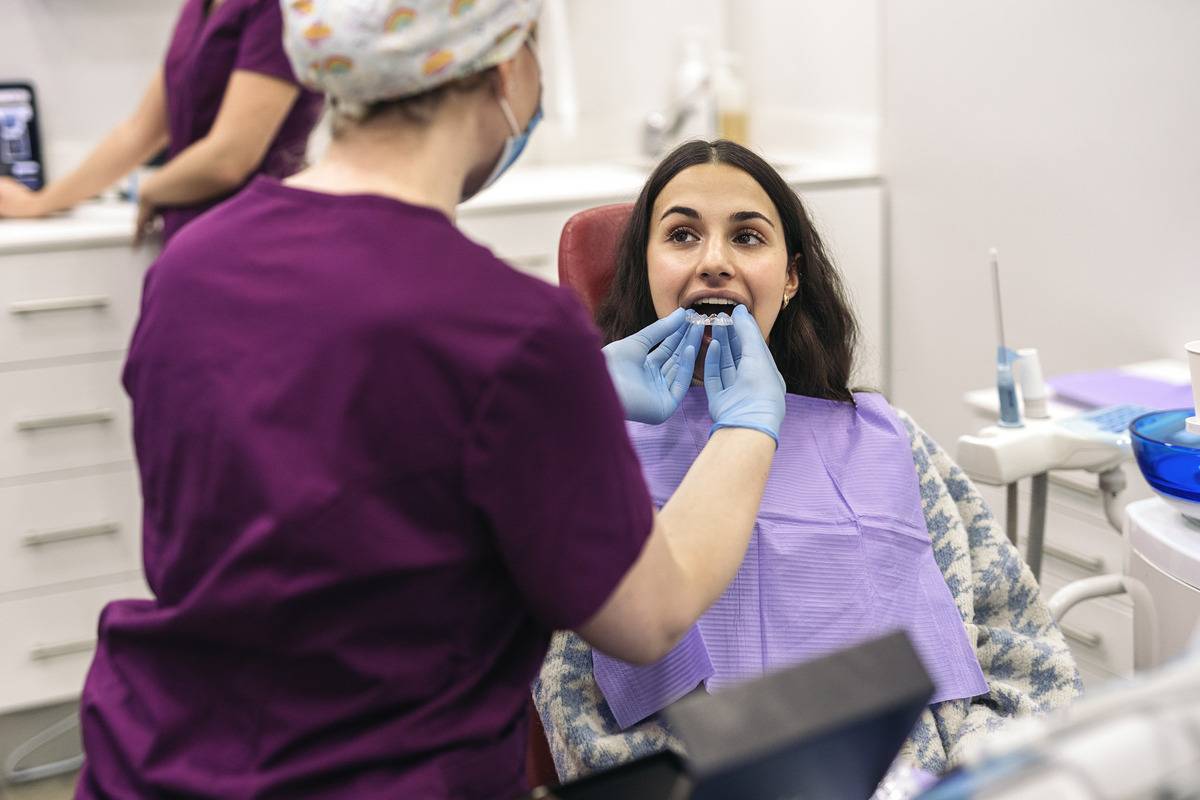
Invisible braces — commonly called clear aligners — are a modern alternative to traditional metal braces. These custom-made plastic trays fit snugly over your teeth and gradually shift them into place. Since they’re nearly transparent and removable, many Americans prefer them for lifestyle reasons. Unlike fixed metal braces, these are discreet and flexible.
Why Are Invisible Braces Getting So Popular in the U.S.?
Let’s look at the numbers:
Growth of the Market
- In 2023, the U.S. invisible orthodontics market was worth about $2.8 billion — and it’s projected to grow to over $16.1 billion by 2030 with a 28.2% annual growth rate.
- Clear aligners make up the largest product segment of this market, driven by demand for comfortable, cosmetic-friendly treatment.
These figures confirm what many patients and dentists are experiencing: invisible systems are no longer niche — they’re mainstream.
Crowded Teeth: A Common Concern
Crowded teeth — medically called a form of malocclusion — occur when there’s insufficient space for teeth to align correctly. This not only affects your smile but also your oral hygiene and long-term dental health, as overcrowded areas are harder to clean.
While exact U.S. statistics on crowding alone are variable, malocclusion affects roughly 60%–75% of people worldwide, and crowding is among the most frequent presentations.
This means millions of Americans could benefit from orthodontic treatment, and many are turning toward invisible solutions.
Benefits of Invisible Braces for Crowded Teeth
Aesthetics & Confidence
One of the biggest draws is appearance. Clear aligners are nearly invisible — a massive plus for adults and teens who might feel self-conscious about traditional braces.
Patient Satisfaction
Studies show that patients treated with clear aligners report significantly higher satisfaction with aesthetics and comfort than those with traditional braces — especially in everyday life and social situations.
For example, a study comparing clear aligners vs. metal braces found:
- Aesthetic satisfaction scores were significantly higher with aligners than with braces.
- Comfort levels were also rated better with aligners.
That’s especially important when correcting crowded teeth — treatment isn’t just effective, it’s comfortable.
Removability Matters
Unlike metal braces, clear aligners can be removed for:
- Eating
- Drinking
- Flossing & brushing
This makes maintaining oral hygiene during orthodontic treatment much easier and helps reduce plaque buildup around wires and brackets.
Fewer Dental Visits?
With traditional braces, you’re often in the dentist chair every 4–6 weeks for adjustments. Aligners typically require fewer in-office visits, thanks to advances such as digital scanning and remote monitoring tools that enable flexible care.
Comfortable, Less Painful Progress
Clear aligners are made from smooth plastic, which tends to cause less irritation to the inner cheeks and gums than brackets and wires.
How Effective Are Clear Aligners for Treating Crowded Teeth?
No orthodontic option — including clear aligners — is perfect for every case, but here’s what the data shows:
Success Rates
- Clear aligners have an 80%–90% success rate for appropriate cases, exceptionally mild to moderate crowding and misalignment.
- Traditional metal braces remain more predictable for complex or severe crowding.
This tells us that if your tooth crowding is mild to moderate, invisible braces are often a clinically sound option—but consultation with a trained orthodontist in Boca Raton determines the best choice for your needs.
Essential Considerations Before You Choose
Budget
Invisible braces tend to be more expensive than basic traditional braces, depending on your plan and coverage. The investment can vary widely, so check insurance benefits and payment plans.
Compliance
Since clear aligners are removable, they only work if worn as prescribed — typically 20–22 hours per day. Failure to comply can lengthen treatment time or compromise results.
Professional Guidance Is Essential
Some online “DIY” solutions promise lower costs but lack in-office supervision. Expert orthodontic oversight ensures safer and more precise tooth movement.
Invisible Braces Trends in the U.S. — What’s Driving Adoption?
Adult Demand
Around 60% or more of invisible brace users are adults, reflecting trends toward discreet cosmetic orthodontics for professional and personal confidence.
Growing Teen Usage
Teenagers are also increasingly adopting clear aligners for aesthetic reasons — and technology tailored to younger patients, such as compliance indicators, helps ensure better results.
Digital Dental Technology
Digital scanning, 3D printing, and AI-assisted treatment planning have made aligners more precise and accessible, improving comfort and outcomes.
What Happens During Treatment?
Here’s a simplified timeline many U.S. patients experience:
- Consultation & 3D Scan — Your orthodontist assesses crowding via digital imaging.
- Customized Treatment Plan — A sequence of aligners is planned for your specific alignment needs.
- Wear Aligners Daily — Typically 20-22 hours daily, changing to the next set every 1–2 weeks.
- Check-Ins — Periodic office visits ensure alignment is progressing.
- Retainers After Treatment — To prevent shifting back, retainers are essential in the long term.
Conclusion
If you’re in the U.S. and considering orthodontic care, invisible braces have become a viable, popular, and effective option — especially for mild to moderate crowding. With comfort, appearance, and flexibility at the forefront, many Americans are opting for aligners over traditional metal braces. However, it’s crucial to work with a qualified orthodontist who can evaluate your case and recommend the best treatment plan.
Whether you’re a teen ready for your first alignment journey or an adult seeking to enhance your smile discreetly, invisible braces could be the right step toward a healthier, straighter smile.
Frequently Asked Questions
1. Are invisible braces as effective as traditional metal braces for crowded teeth?
Clear aligners are very effective for mild to moderate crowding and have success rates around 80%–90% in appropriate cases. For complex crowding, traditional braces may still be a better choice.
2. How long does treatment with invisible braces typically take?
Treatment length varies per person, but many aligner cases take 12–18 months. Dentists can give you a more exact timeline based on your level of crowding.
3. Can I remove invisible braces when I eat?
Yes! One advantage is that you can remove them to eat and drink. Just remember: consistent wear (20–22 hours/day) is key for effectiveness.
4. Do invisible braces hurt?
Some pressure or mild discomfort is normal when switching aligners, but most people find them more comfortable than metal braces because there are no wires or brackets.
5. Will insurance cover invisible braces?
Coverage varies widely. Some dental plans cover part of the clear aligner treatment, while others do not. Always check your individual policy or talk to your orthodontic office about financing options.