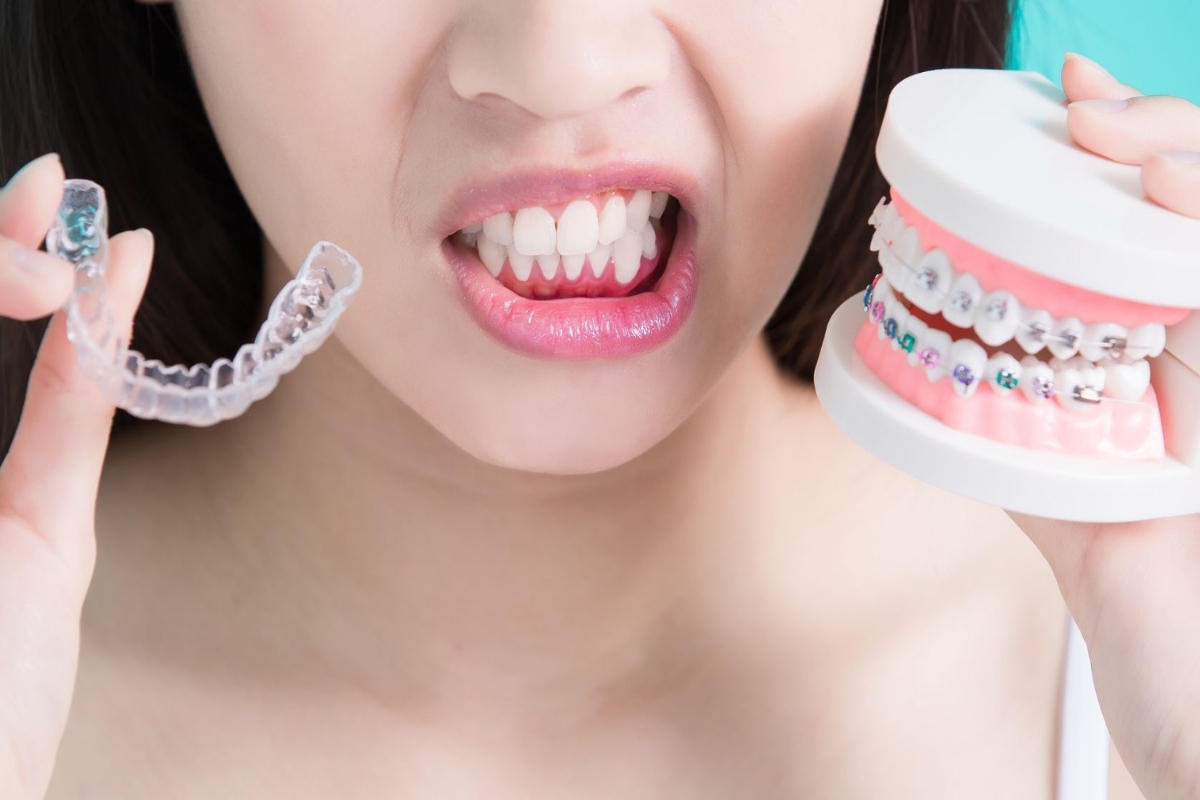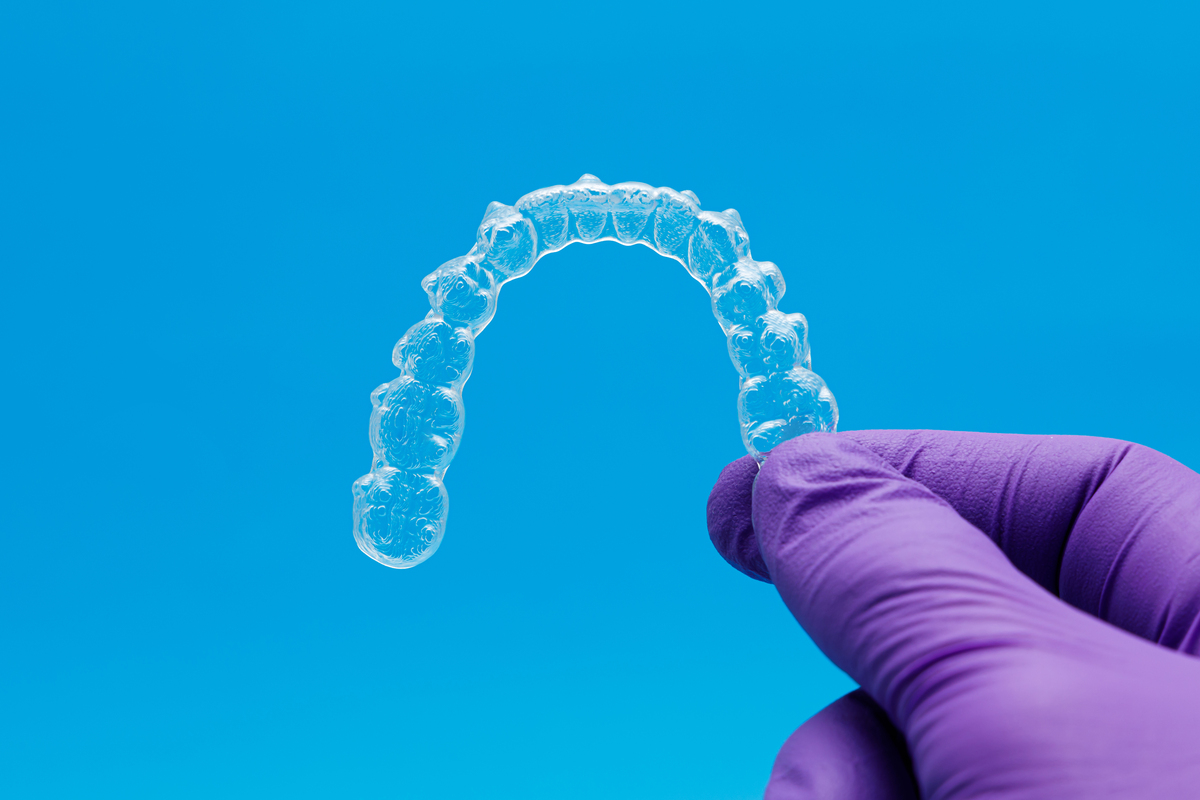





Remember looking around your high school cafeteria and seeing a sea of “metal mouths”? If you’re like most adults today, you probably want the straight smile without the high school flashback. You want invisible braces (like Invisalign or other clear aligners), and you likely have one burning question: “How long is this going to take?”
Are we talking a few months of discipline, or years of taking plastic trays out before every coffee break?
The short answer: It’s probably faster than you think, but slower than you hope. Let’s dig into the actual data to give you a realistic timeline so you can stop guessing and start smiling.
The Average Timeline
If you are looking for a ballpark number, the industry standard for the average treatment time with invisible braces is 12 to 18 months.
However, averages can be misleading. A recent analysis of treatment times suggests that clear aligners are generally faster than traditional metal braces. While metal braces often require 18 to 24 months, clear aligners frequently shave roughly six months off that timeline, depending on the complexity of the case.
Breakdown by Complexity
Your specific timeline depends heavily on why you need braces. According to orthodontic data, here is how the clock ticks based on the severity of your issue:
- Minor Corrections (The “Touch-Up”): If you have minor spacing issues or slight crowding (often called “social six” corrections), treatment can be lightning-fast—sometimes as short as 3 to 6 months.
- Moderate Cases: For standard alignment issues, the sweet spot is the 12 to 18-month range.
- Complex Cases: If you have a severe bite issue (malocclusion) or significant crowding, expect to be in it for the long haul—18 to 24 months or more.
Did you know? Invisalign has a success rate of approximately 96% for mild to moderate orthodontic cases, often delivering results faster than traditional orthodontics because the trays apply force to the teeth as a whole unit rather than individually.
What affects how long invisible braces take?
Severity & type of movement required
- Simple tooth movement (small rotations, minor spacing) = faster. Big bite corrections, significant rotations, or multiple teeth moved = longer. Studies show that complex cases commonly span the 18–24+ month range.
Patient compliance (wear time)
- Aligners are removable, so they only work when worn. Research and manufacturers recommend ~20–22+ hours per day. Lower wear time directly increases treatment time and the chance of needing refinements.
Refinements & mid-course corrections
- Many patients need “refinement” scans and additional aligner sets. One study found that the average Invisalign patient required ~2.5 refinement scans, and only about 6% completed treatment without refinements — refinements add months.
Switching to braces or treatment changes
- Around 17% (≈1 in 6) of patients in one study switched from clear aligners to fixed braces because aligners alone couldn’t fully correct the issue, which, of course, extends total treatment time.
Provider skill, monitoring tools, and tech
- Providers using digital monitoring, frequent virtual check-ins, and refined staging plans often keep treatment on track. Some specialized systems (like limited-movement “Invisalign GO” type systems) can deliver faster results for select, limited-correction cases (frequently 3–6 months in studies focusing on those systems).
Age
- Younger patients (teenagers) sometimes respond more quickly to certain types of movement because their bone remodeling can be quicker; however, adult compliance also plays a significant role. Some manufacturer data suggest teens can finish a bit faster on average.
Real numbers from studies (so you can weigh expectations)
- Average treatment times in published studies: ranges reported include ~13.4 months in one comparative study and ~22.8 months in a larger adult cohort that often required refinements (showing real-world variance and that predicted plans can underestimate time).
- Refinements: average 2.5 refinement scans per patient in the 2023 study — only 6% finished without any refinements. Refinements tend to add several months.
- Required daily wear: aligners must be worn ~20–22 hours/day to stay on schedule; decreased wear increases duration.
- Comparisons with braces: some studies show clear aligners can be as fast or faster in certain cases (e.g., mean ~18 months with aligners vs ~24 months with fixed braces in one 2024 analysis), but findings depend on case mix and methodology.
Pro Tip: When asking your orthodontist in Boca Raton about time, ask if their estimate includes potential refinement stages.
Typical patient journey & how time is spent
- Consult & planning (1–3 weeks): exam, scans, and digital treatment plan (ClinCheck or provider equivalent).
- Active aligner phase (6–24+ months): wearing successive aligner sets (typical schedule: 1–2 weeks per tray depending on provider), plus in-office or virtual checkups.
- Refinements if needed (adds weeks–months): new scans and extra sets.
- Retention (after active treatment, ongoing): retainers to keep results (not part of “how long treatment takes,” but essential after treatment).
How to help your invisible braces work faster (and stay on schedule)
- Wear them consistently: aim for 20–22 hours/day. Every hour you don’t wear them is one hour lost.
- Follow your provider’s schedule for aligner changes and check-ins.
- Attend refinement appointments promptly if the provider recommends them — delaying can lengthen the total time.
- Use digital monitoring if offered (some offices use apps or remote scan tech to catch issues early).
Budget vs time — a quick note
The treatment budget and timeline are separate but related: more complex, longer cases usually cost more because they require more aligners, more appointments, and sometimes auxiliaries (attachments, elastics). Discuss both timeline and fees upfront with your provider so you’re not surprised. (Local clinic estimates vary widely.)
Conclusion
There is no one-size-fits-all answer to “How long do invisible braces take?” — but the best summary is: plan for 12–18 months for many adult cases, expect shorter times (~6–9 months) for minor cosmetic fixes, and allow 18–24+ months for more complex corrections. Real-world studies report a wide range (some averaging ~13 months, others ~22–23 months) and show that refinements are common, so build a little flexibility into your expectations. Your best strategy is to select a skilled provider, commit to 20–22 hours/day wear, and stay engaged during treatment — that’s the fastest route to the smile you want.
FAQs
1. Can I finish Invisalign in 6 months?
Yes — for very mild corrections (minor crowding or spacing) and with perfect compliance, some patients finish in about 6 months, but that’s not typical for comprehensive cases. Be sure your provider confirms whether your case is suitable for a short plan.
2. What happens if I don’t wear my aligners enough each day?
Insufficient wear (less than about 20 hours/day) slows tooth movement, causes aligners to fit poorly, and often requires refinements or extended treatment time. Studies stress the importance of consistent daily wear as a key success factor.
3. Do most people need refinements?
Yes — refinements are common. One extensive study found the average patient needed 2.5 refinement scans, and only about 6% finished without any refinements. Expect the possibility of extra aligners after the initial plan.
4. Are aligners quicker than traditional braces?
It depends. In some cases and studies, aligners were as fast or faster than fixed braces (one analysis reported a mean of 18 months for aligners vs 24 months for braces). But results vary by case complexity and provider approach. Ask your orthodontist which is likely faster for your specific needs.
5. Will I need to wear retainers after finishing?
Yes. Retention is essential. After active aligner treatment, you’ll typically wear retainers (often nights-only long-term) to keep your teeth from drifting. Retainers don’t affect the active-treatment timeline, but they’re crucial to keep your results. (General orthodontic standard.)
6. Can I speed up my invisible braces treatment?
Yes, potentially. There are devices available (like AcceleDent or VPro) that use high-frequency vibrations to help seat the aligners and potentially speed up tooth movement. However, the most effective way to speed up treatment is simple: wear your aligners for 22+ hours a day. Never skip days.
7. Does age affect how long treatment takes?
Yes. Younger patients (teens) often see faster results because their jawbones are still growing and are less dense, allowing teeth to move more easily. According to some studies, the average treatment time for teens is around 16 months, while adults may average closer to 22 months for similar complexity due to denser bone structure.
8. What happens if I only wear my aligners at night?
If you are using a standard “all-day” system like Invisalign and only wear it at night, your treatment will likely fail or take years. However, there are specific “night-time only” clear aligner brands. Be warned: these treatments typically take longer (often 10+ months for very mild cases) because the continuous force required to move teeth safely is interrupted every day.
9. Is it faster to fix gaps or crowded teeth?
Generally, spacing issues (gaps) are easier to correct than severe crowding. Crowding often requires expanding the arch or shaving down enamel (IPR) to create space, which is a more complex mechanical process than simply pulling teeth together to close a gap.
10. Will I talk funny with invisible braces?
For the first few days, yes. Most patients experience a slight lisp for 2 to 4 days as the tongue adjusts to the plastic trays. This is temporary and usually disappears completely once you get used to the aligners.